Science Denial
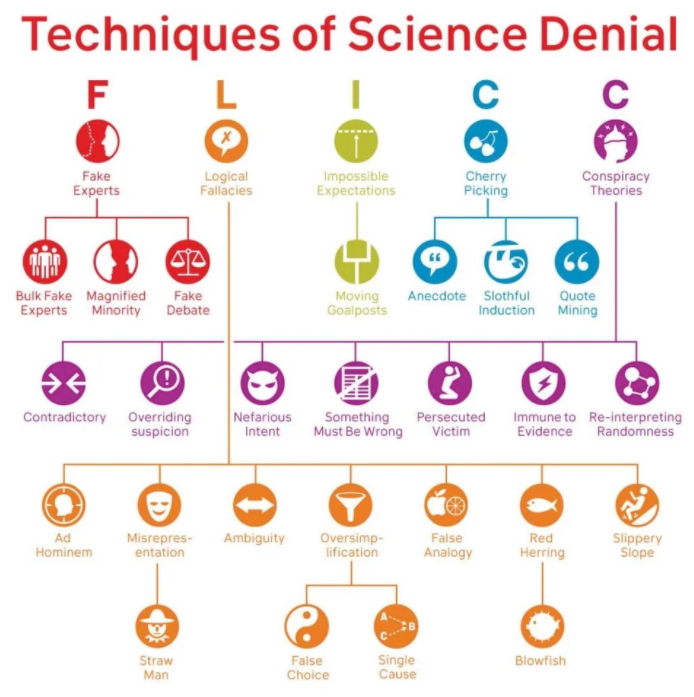
Science denial techniques are catalogued in the FLICC taxonomy, which Skeptical Science presents as five groups: Fake experts, 📝Logical fallacies, Impossible expectations, Cherry picking and Conspiracy theories.
The Skeptical Science page, posted 31 March 2020 by John Cook, traces the framework to 2007, when Mark Hoofnagle suggested on his Science Blog Denialism that denialists across topics such as climate change, evolution and HIV/AIDS employed the same rhetorical tactics. The five general tactics were conspiracy, selectivity (cherry-picking), fake experts, impossible expectations (also known as moving goalposts) and general fallacies of logic. Two years later, Pascal Diethelm and Martin McKee published "Denialism: what is it and how should scientists respond?" in the European Journal of Public Health, fleshing out the five tactics further.
Cook writes that in 2013 he adapted the five techniques into the acronym FLICC, and that it became the underlying framework of Denial101x, a free online course developed in 2015 by the University of Queensland and Skeptical Science. After moving to the Center for Climate Change Communication at George Mason University, he continued to build the taxonomy, adding reasoning fallacies and, with The Conspiracy Theory Handbook, seven traits of conspiratorial thinking.
The page defines each technique: cherry picking is "Carefully selecting data that appear to confirm one position while ignoring other data that contradicts that position," and fake experts is "Presenting an unqualified person or institution as a source of credible information." The five headings of the guide below match the five FLICC categories the page lists.
Techniques of science denialfrom r/coolguides.